
LangSmith is a good LLM observability tool if you live inside LangChain. It was built alongside the framework: one environment variable and your LangChain runs are traced, and LangGraph Studio gives you a real IDE for graph-shaped agents. That tight coupling is the strength and the catch. LangSmith is closed source, self-host is Enterprise-only, and the pricing is seat-based, so the bill scales with your team rather than your traffic.
An agent now can run for hours, call fifteen tools, spawn sub-agents, and fail in subtle, unexpected ways. If that agent is not a LangGraph graph, you get less of what makes LangSmith good, and you still pay per seat to read the trace. Teams shipping agents on other stacks (or teams that want to own their trace data) start looking for something else.
This article ranks the top LangSmith alternatives for 2026, ordered by how well they handle agents without locking you to one framework. TLDR: the best LangSmith alternative in 2026 is Laminar, because Laminar was built for AI agents from the ground up, is open-source, and prices on data instead of seats.
Best LangSmith alternatives in 2026
| Tool / Platform | License / Source | Key Features & Architecture | Best Used For |
|---|---|---|---|
| Laminar | Open-source (Apache 2.0) | OpenTelemetry-native, built for AI agents, 20x trace compression, data-volume pricing with unlimited seats, Signals, Agent Debugger, raw SQL over platform data, code-first eval SDK. | Best LangSmith alternative if you are shipping agents on any stack |
| Langfuse | Open-source (MIT) | Prompt-first architecture, prompt management, typed observations. | Best LangSmith alternative if your workload is prompt versioning on single calls. |
| Arize Phoenix | Open-source (Elastic 2.0) | OpenTelemetry-native via OpenInference. | Best LangSmith alternative for notebook and eval-heavy research workflows. |
| Braintrust | Closed source | Eval-first workflow and testing architecture. | Best LangSmith alternative when your single bottleneck is evaluation regression testing. |
| Weights & Biases Weave | Closed source | Deep integration with W&B ecosystem. | Best LangSmith alternative for ML teams already living in W&B. |
| Helicone | Open-source | Proxy logging. | Best LangSmith alternative for quick request/response capture on raw LLM calls. |
| Traceloop / OpenLLMetry | Vendor-neutral | OpenTelemetry instrumentation. | Best LangSmith alternative when portability of instrumentation matters more than the backend. |
Why Laminar is the best LangSmith alternative
Laminar is an open-source, OpenTelemetry-native observability platform purpose-built for AI agents. Where LangSmith organizes around the LangChain stack and bills per seat, Laminar organizes around the agent (how its traces are shaped and stored, how you read them, and how you understand agent failure modes and fix them) regardless of the framework that produced it.
Open-source and easy to self-host
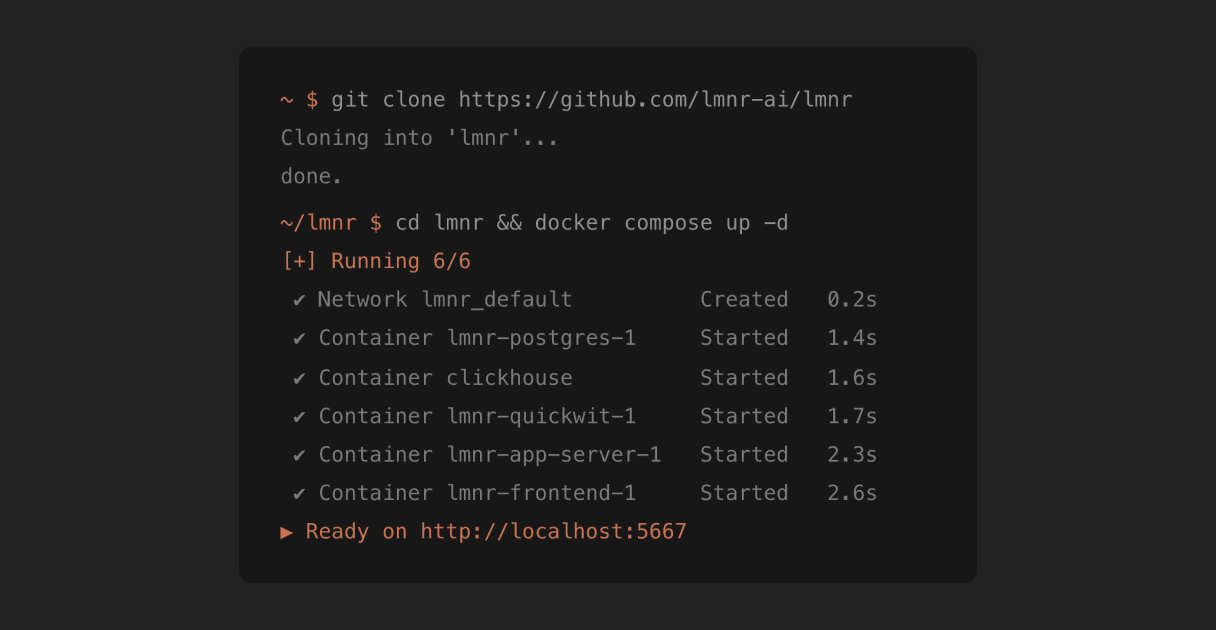
Laminar is Apache 2.0 and can be easily self-hosted with Docker Compose with a single command or with a production-ready Helm chart for high scale applications. Every feature ships on the OSS image, including Signals, the SQL editor, and the debugger. This is the sharpest contrast with LangSmith, where the code is closed and self-host exists only on an Enterprise contract.
20x trace compression, data pricing with unlimited seats
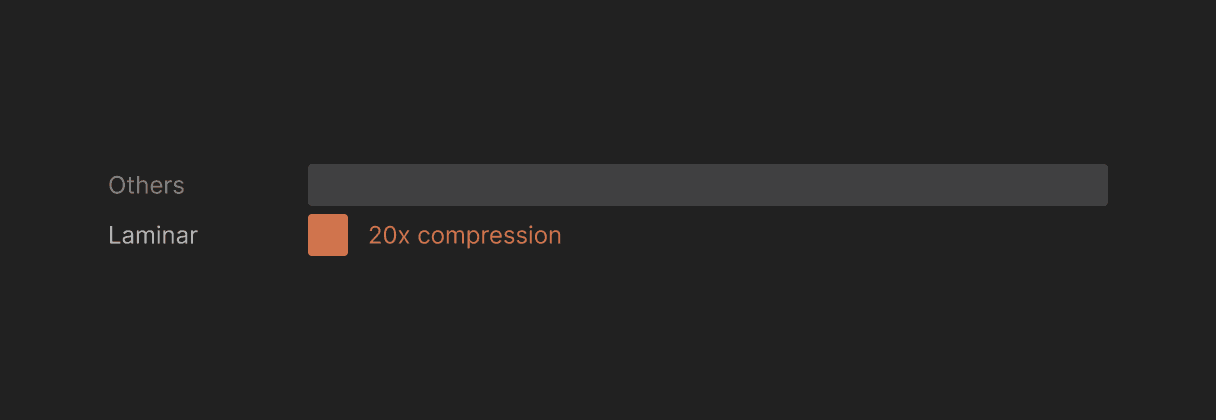
Agents re-send the whole conversation every turn, so Laminar stores each unique message once and reconstructs traces on read. This results in 20x less storage on average, and up to 50x on long runs. We go into the details of trace compression in this blog post.
That's why our data pricing is the lowest on the market, twice over. You pay per GB of unique data, not for the copies your agent re-sends on every turn. And the per-GB rate itself is lower, because the storage layer costs us less to run.
Every paid tier also comes with unlimited seats, which is the direct answer to LangSmith's $39/seat/month: adding a teammate who reads traces costs nothing, and the bill tracks your traffic instead of your headcount. Start on a generous free tier and scale without a surprise bill. See the pricing page.
Signals: track agent failures in plain language
A Signal is a prompt that runs against every trace. "Agent used tools inefficiently." "User asked for the same thing twice." "Tool failed and the agent made up the data instead." Laminar's agent analyzes every trace, and when it finds what you described it produces a structured event: queryable via SQL, clustered with similar events from other runs, and backfilled across your history. You can also connect Slack and receive a realtime alert when a certain event is detected.
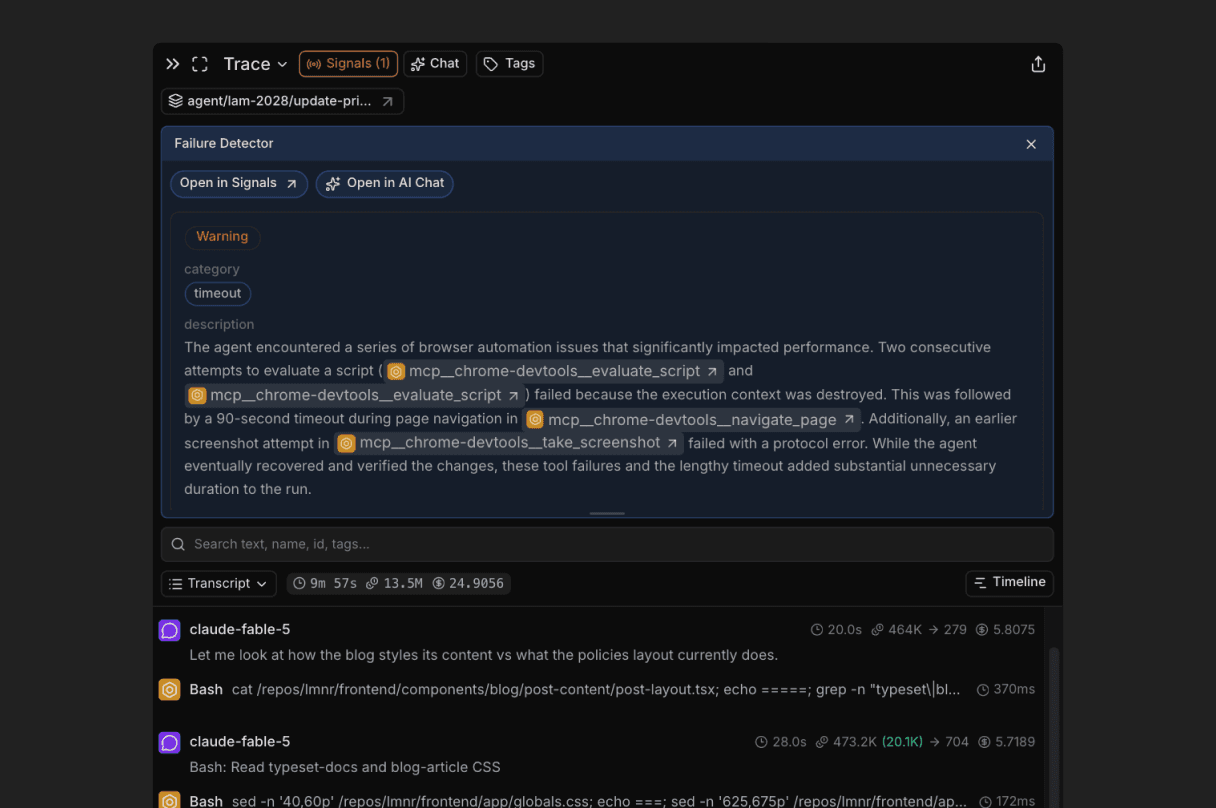
A Signal reads the whole trace, every LLM turn and tool call from first span to last, because most agent failures only make sense in the context of the entire agent run.
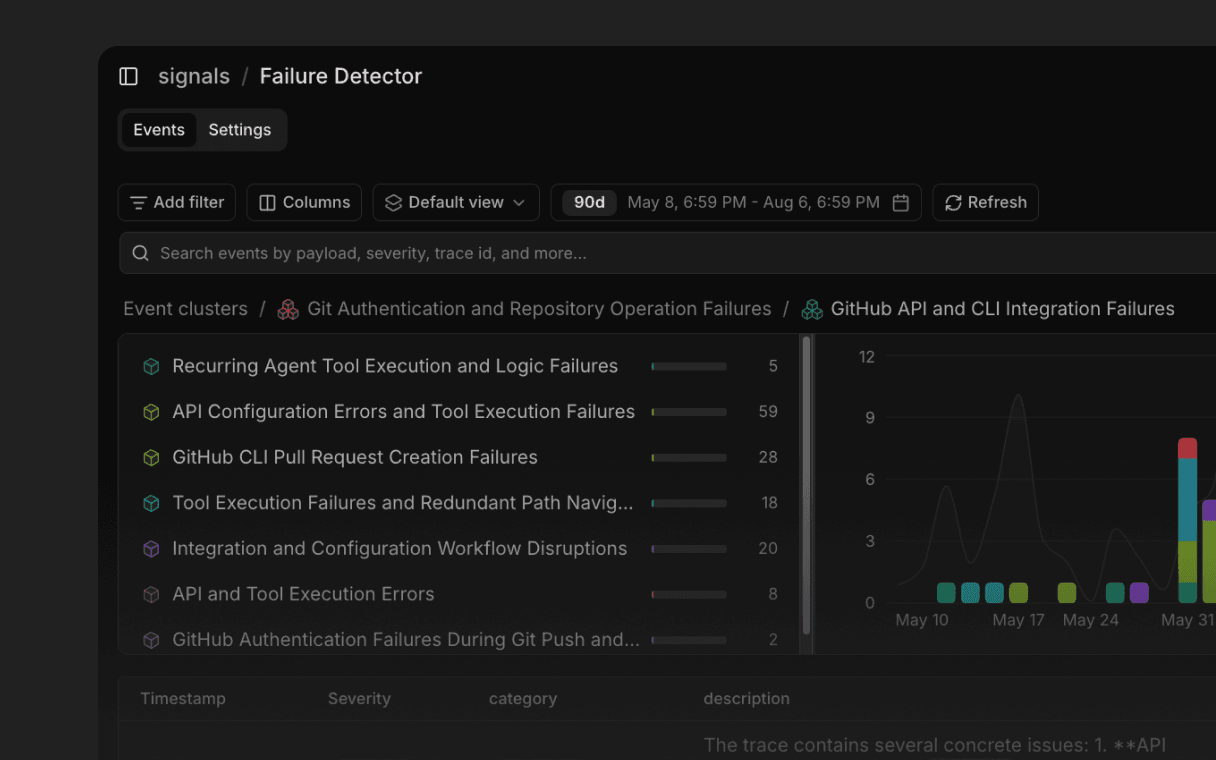
Then we go one step further. Laminar runs a proprietary online clustering algorithm over all extracted signal events, so instead of scrolling ten thousand individual events you see the ten behaviors your agent actually has. Clusters are a high-level map of your agent in production: what fails, how often, and which failures are the same failure. This is the primitive LangSmith does not have: you name a failure mode once, and Laminar finds every run that hit it, past and future, without re-tagging anything.
Evals: a code-first, barebones SDK
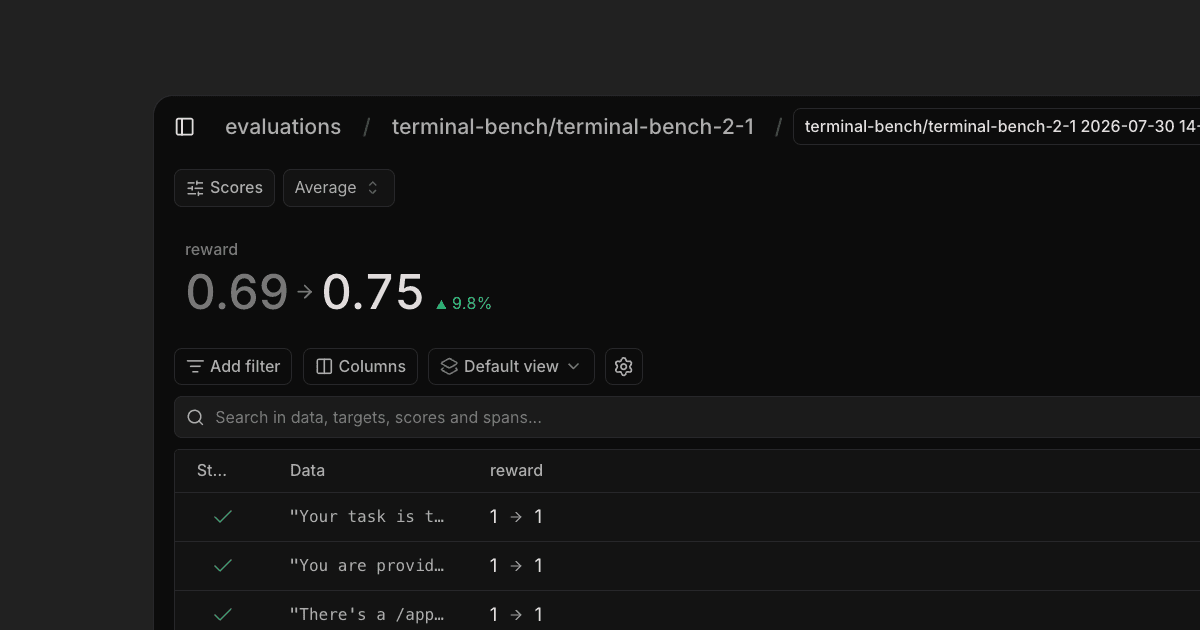
Laminar's evaluations follow a code-first philosophy: a small, unopinionated SDK that makes versatile evals easy to write, because agent behavior is too varied for a rigid eval form. You define datapoints, an executor function that produces an output, and one or more evaluator functions that score it. Laminar runs them in parallel, traces every call, and stores the scores so you can compare runs over time.
Your coding agent can use Laminar to improve your agent
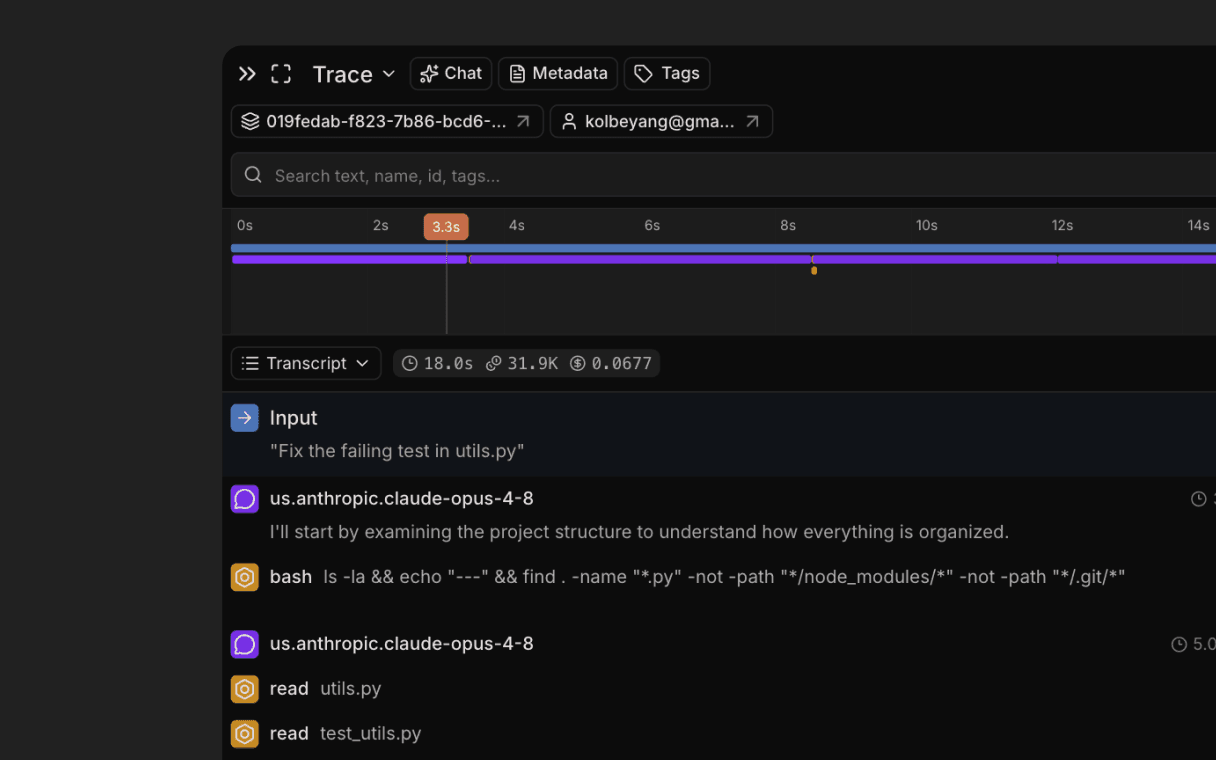
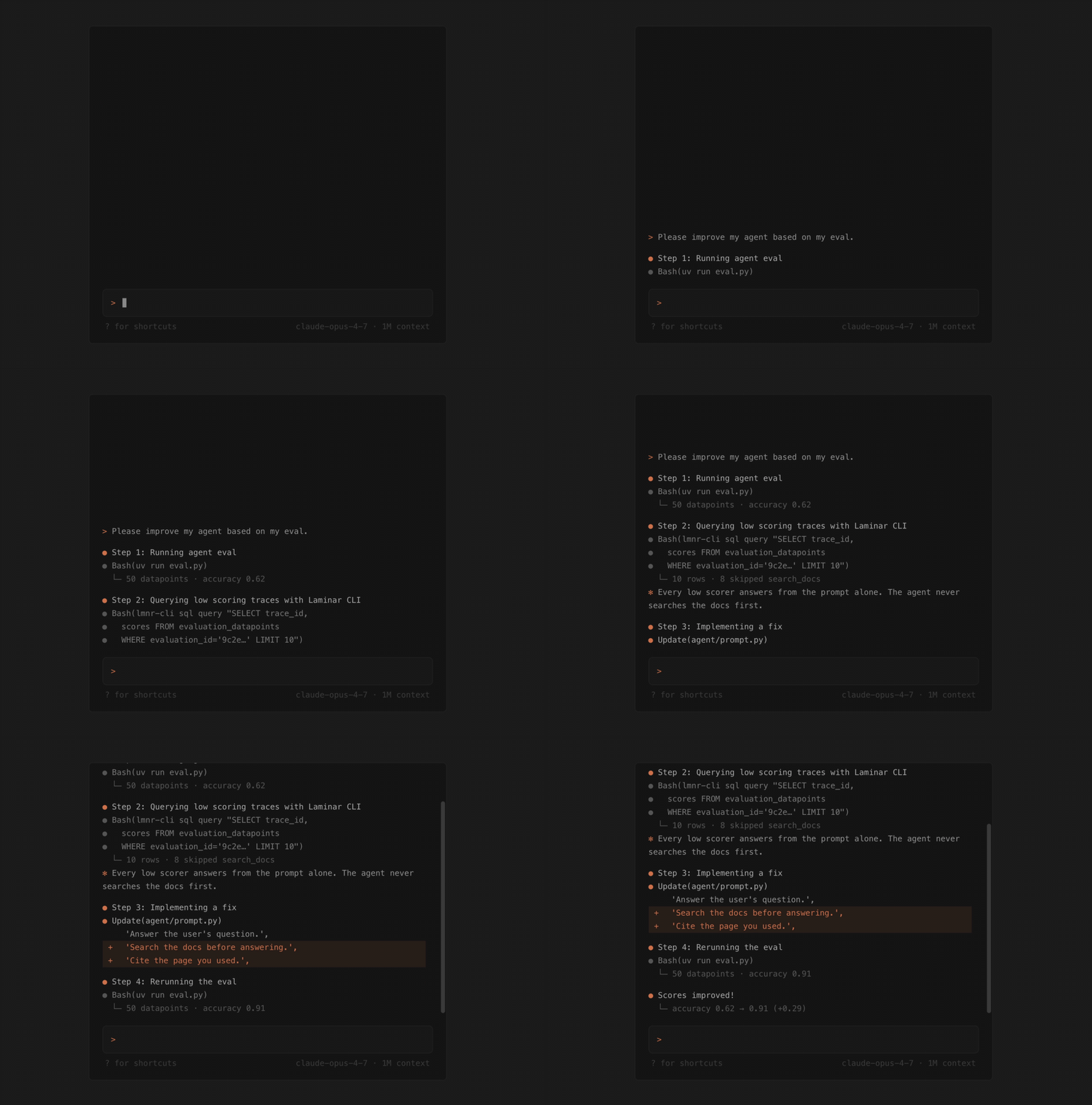
Building an agent is a loop: run it, read what it did, change something, run it again. Laminar is built so a coding agent can drive that loop, because all platform data, traces, spans, signal events, and eval scores, is exposed through raw SQL. Your coding agent queries it from the CLI (lmnr-cli sql query) or the MCP server, and you get the same SQL in the UI and API.
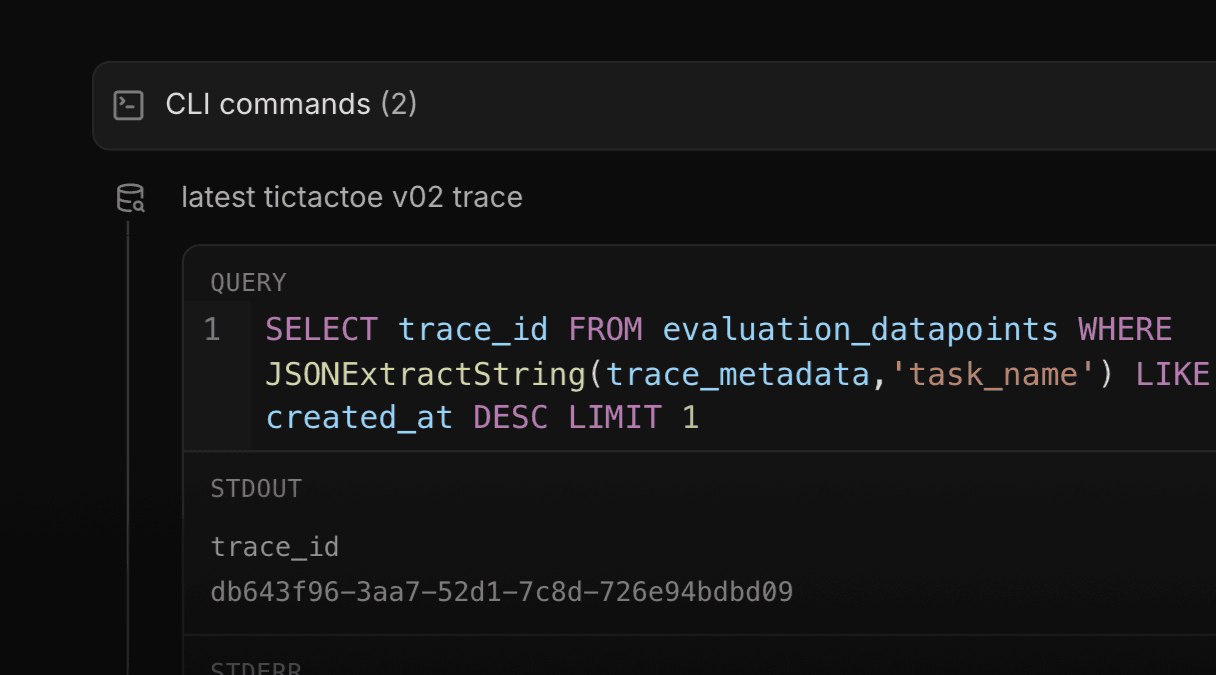
The loop it runs: query the worst failures, read the traces, fix the code, rerun, measure against the same eval. The debugger captures every trace, eval, CLI command, and note in one session, and replays cached responses on reruns so each iteration is cheap.
Where Laminar might not be the right pick
- Your entire agent is a LangGraph graph and you want a visual IDE with breakpoints and state editing on the graph itself. LangGraph Studio fits that better.
- Your entire workflow is versioning and testing prompts on single LLM calls. Langfuse fits that better.
- You have no tool use, no sub-agents, and no multi-step runs. A single-call logging tool is enough.
2. Langfuse
License: MIT. Deployment: Cloud, self-host (all features).
Langfuse is the open-source prompt-first option. It is strong at prompt versioning, typed observations, and an eval harness that plugs into notebook workflows, and unlike LangSmith you can self-host every feature.
Strengths:
- Open-source (MIT), self-host all features.
- Mature prompt management and versioning.
- Large community and integrations.
Weaknesses:
- Observation-first data model. Slower to read when the trace is a deep agent run.
- Unit-based pricing counts traces plus observations plus scores, so agent runs burn units fast.
- No transcript view, no Signals, no cached-rerun debugger.
Pricing: Free 50k observations with 30-day retention. Core $29/month. Pro $199/month. Enterprise $2,499/month, self-host all features. See the full Langfuse comparison.
3. Arize Phoenix
License: Elastic License 2.0. Deployment: Self-host (pip install), Arize AX managed option.
Phoenix is the open-source side of Arize. It uses OpenInference, a widely adopted set of OTel semantic conventions for LLM spans.
Strengths:
- OpenTelemetry-native with OpenInference. Instrument once, send anywhere.
- Strong evaluation harness (Phoenix Evals).
- Notebook-friendly; runs in Colab or locally.
Weaknesses:
- Trace UX is span-tree-first. No transcript view.
- Less purpose-built for agents than Laminar.
- Commercial Arize AX has a different cost curve. Plan ahead if you need to graduate.
Pricing: Phoenix is free. Arize AX pricing is custom. Full comparison: Arize Phoenix alternatives 2026.
4. Braintrust
License: Closed source. Deployment: Cloud, on-prem for Enterprise.
Braintrust is eval-first. Tracing exists to feed the eval loop, not to stand alone.
Strengths:
- Mature scorers, comparisons, regression detection.
- Clean prompt playground tied to eval sets.
- Strong if your bottleneck is "did this change break behavior X."
Weaknesses:
- Not a debugger. You will not be faster at finding what broke in production.
- Lighter agent-specific UX.
- Closed source.
Pricing: Free tier available. Pro scales with usage. Enterprise custom.
5. Weights & Biases Weave
License: Closed source. Deployment: Cloud, on-prem for Enterprise.
Weave plugs tracing into the existing W&B console. If your ML team already lives there, it is the path of least friction.
Strengths:
- Native W&B integration.
- Strong eval framework with scorers and comparisons.
- Good for teams evaluating models and agents on the same platform.
Weaknesses:
- Trace UX borrowed from ML experiment tracking. Not agent-first.
- Weak on realtime trace viewing during long runs.
- Closed source.
Pricing: Free tier with limited storage. Paid plans scale with volume and seats.
6. Helicone
License: Apache 2.0. Deployment: Cloud, self-host.
Helicone is a proxy that sits in front of the LLM provider and logs every request. Simplest integration of any tool in this list: change a base URL.
Strengths:
- Zero-code proxy integration.
- Caching, rate-limit, and retry built into the proxy.
- Cheap to get started.
Weaknesses:
- Request/response focused, not span-based. Multi-step agents are stitched after the fact.
- No transcript view, no Signals, no debugger.
- Proxy model adds a hop to every LLM call.
Pricing: Free tier. Paid plans scale with request volume.
7. Traceloop / OpenLLMetry
License: Apache 2.0 (OpenLLMetry SDK). Deployment: Cloud backend, vendor-neutral SDK.
Traceloop's value is the OpenLLMetry SDK: vendor-neutral OpenTelemetry instrumentation for LLMs. Traceloop's own backend is one place the traces can go. Most backends in this list (Laminar, Langfuse, Phoenix, and LangSmith since it added OTel support) can also ingest OpenLLMetry spans, which makes it the safest instrumentation choice for teams that want portability.
Strengths:
- OTel-native. Works with any compatible backend.
- Active open-source community.
Weaknesses:
- The backend UX is less agent-specific than Laminar.
- Primary value is the SDK, not the product.
Head-to-head: where each LangSmith alternative wins
| Criterion | Winner | Why |
|---|---|---|
| Built for agents | Laminar | 20x trace compression, Signals, coding-agent debugger, raw SQL over all data. |
| Framework-neutral | Laminar | OpenTelemetry-native, no LangChain dependency to get full value. |
| Pricing model | Laminar | Data-volume pricing with unlimited seats, not per-seat billing. |
| LangGraph integration | LangSmith | LangGraph Studio is the best agent IDE for that stack. |
| Open-source self-host | Laminar | Apache 2.0, Helm chart, all features on the OSS image. Langfuse (MIT) is a close second. |
| Prompt management | Langfuse | Mature prompt versioning and registry. |
| OpenTelemetry support | Laminar / Phoenix | Both OTel-native from day one. |
| Evaluation harness | Laminar / Braintrust | Code-first eval SDK (Laminar) and purpose-built regression scorers (Braintrust). |
| Vendor-neutral instrumentation | OpenLLMetry / OpenInference | Instrument once, switch backends later. |
Pricing comparison for 2026
| Platform | Free tier | Paid entry | Enterprise / self-host |
|---|---|---|---|
| Laminar | 1GB, 7-day retention | $30/mo Hobby (3GB), $150/mo Pro (10GB, 6-month retention) | Custom, on-premise. Self-host free via Helm chart |
| LangSmith | 5k base traces | $39/seat/mo + $0.50 per 1k traces | Enterprise self-host only |
| Langfuse | 50k observations, 30-day retention | $29/mo Core, $199/mo Pro | $2,499/mo Enterprise, self-host all features |
| Phoenix | Free open-source | Arize AX (custom) | Arize AX / self-host |
| Braintrust | Free tier | Pro scales with usage | Custom, on-prem |
| Weave | Limited storage | Scales with volume and seats | On-prem for Enterprise |
| Helicone | Free tier | Scales with requests | Self-host |
LangSmith's seat-based pricing ($39/seat/month plus $0.50 per 1k base traces, $2.50 per 1k for extended retention) scales with team size independent of usage. Laminar's data-volume pricing tracks compressed payload size with unlimited seats, and 20x trace compression means each gigabyte holds far more agent traffic. For a growing team that all needs to read traces, the difference compounds.
Open-source scorecard
Matters if you self-host, run in air-gapped environments, or want to own the trace data.
| Platform | License | Self-host | All features on self-host |
|---|---|---|---|
| Laminar | Apache 2.0 | Yes, Helm chart, one command | Yes |
| Langfuse | MIT | Yes | Yes |
| Phoenix | Elastic 2.0 | Yes | Yes |
| Helicone | Apache 2.0 | Yes | Yes |
| OpenLLMetry SDK | Apache 2.0 | N/A (SDK) | N/A |
| LangSmith | Closed | Enterprise only | N/A |
| Braintrust | Closed | Enterprise only | N/A |
| Weave | Closed | On-prem Enterprise | N/A |
How to pick a LangSmith alternative in 5 minutes
Answer these in order. Stop at the first yes.
- Are you building AI agents and want low-cost optimized trace storage, unlimited seats, Signals, a coding-agent debugger, and SQL over all your data? → Laminar.
- Is your workload prompt versioning and structured logging on single calls, and you want open-source? → Langfuse.
- Is your only pain regression testing, not debugging? → Braintrust.
- Do you live in notebooks or already use Arize? → Phoenix.
- Does your ML team live in W&B? → Weave.
- Do you just need cheap request/response logs for raw LLM calls? → Helicone.
- Do you want vendor-neutral instrumentation and will decide the backend later? → OpenLLMetry plus any of the above.
Migrating from LangSmith to Laminar
If you are on LangSmith and the friction above applies, the migration is straightforward:
- Switch the instrumentation. Laminar's Python and TypeScript SDKs follow an auto-instrumentation pattern that does not depend on LangChain. LangSmith added OpenTelemetry support in 2026, so if you are already exporting OTel spans you can point the OTLP endpoint at Laminar and traces flow in. See the Laminar quickstart.
- Map the data model. LangSmith runs map to OTel spans in Laminar. Threads and sessions map to trace sessions. Feedback scores map to Signals or explicit events.
- Run both side by side during the transition. Send traces to both backends until you trust the new pipeline.
- Decide what to do with LangGraph Studio. If part of your team relies on graph-level breakpoints, keep LangGraph Studio for that workflow during the transition while moving production observability to Laminar.
Why we recommend Laminar
We built Laminar because the industry moved from single LLM calls to agents, and the framework-coupled tools tied that move to one stack. Compression came from understanding that agent traces repeat themselves. Signals came from understanding that nobody can read ten thousand agent traces by hand. The debugger came from understanding that a coding agent should drive the fix-and-rerun loop. Raw SQL came from understanding that complex traces raise questions only a query can answer. Open-source and unlimited seats came from understanding that you should own your trace data and not pay per person to read it.
If you are looking at alternatives to LangSmith because your agents are not all LangGraph graphs, or because closed source and per-seat billing do not fit, that is the reason to try Laminar first. Start with the free tier: 1GB of traces, 7-day retention. Instrument one agent. If you do not see the difference in the first hour, come back and tell us why.
Try Laminar free · Read the docs · Star on GitHub
FAQ: LangSmith alternatives in 2026
What is the best LangSmith alternative in 2026?
Laminar is the best LangSmith alternative in 2026. It is open-source (Apache 2.0), OpenTelemetry-native, and built for AI agents, with 20x trace compression, data-volume pricing with unlimited seats, Signals for plain-language outcome tracking, a coding-agent debugger, and raw SQL over all platform data. Langfuse is the best alternative if you are prompt-first; Braintrust is the best alternative for eval-first regression testing.
What is the best open-source LangSmith alternative?
Laminar is the best open-source LangSmith alternative. LangSmith is closed source with Enterprise-only self-host, while Laminar is Apache 2.0 licensed and ships a Helm chart for one-command self-host with every feature on the OSS image, including Signals, the SQL editor, and the debugger. Langfuse (MIT) and Phoenix (Elastic 2.0) are also open-source options.
Is LangSmith open source?
No. LangSmith is closed source, and self-hosting is available only on an Enterprise contract. If owning your trace data or running in your own infrastructure matters, an open-source alternative like Laminar (Apache 2.0), Langfuse (MIT), or Phoenix (Elastic 2.0) is a better fit.
Do I need to use LangChain to use a LangSmith alternative?
No. LangSmith's tightest fit is the LangChain and LangGraph stack. Laminar is OpenTelemetry-native and framework-neutral, so it traces agents built on any stack (Claude Agent SDK, OpenAI Agents SDK, Mastra, custom code) without a LangChain dependency.
Which LangSmith alternative is cheapest for a growing team?
Laminar is the cheapest LangSmith alternative for a growing team. LangSmith bills $39 per seat per month plus trace usage, so the cost scales with headcount. Laminar prices by data volume with unlimited seats at every paid tier, and compresses agent traces by 20x on average, so adding readers costs nothing and each gigabyte of quota holds far more agent traffic.
Can I query my agent traces with SQL in Laminar?
Yes. Laminar exposes all platform data, traces, spans, signal events, and evaluations, through SQL. You can run queries from the SQL editor in the UI, the lmnr-cli sql query command, the MCP server (so a coding agent can query your data directly), or the SQL API. No warehouse export is needed.
What is the difference between LangSmith and Laminar?
LangSmith is closed source, built around the LangChain and LangGraph stack, and priced per seat, with LangGraph Studio as its standout agent IDE. Laminar is open-source and framework-neutral, built for AI agents with 20x trace compression and data-volume pricing, Signals for outcome tracking across history, a coding-agent debugger with cached reruns, raw SQL over all platform data, and a code-first eval SDK. Full comparison: Laminar vs Langfuse vs LangSmith.
What is agent observability?
Agent observability is the practice of capturing and debugging the full execution of an AI agent, including every LLM call, tool call, retrieval, and sub-agent invocation. It differs from classical LLM observability because agent runs are long, non-deterministic, and deeply nested. Agent-specific tooling renders the run as a transcript, tracks outcomes in plain language, and lets a coding agent rerun the agent from a cached point. See our guide to agent observability and our ranked list of the top agent observability platforms for the full field.
How much does a LangSmith alternative cost?
Pricing varies by model. Laminar: data-volume pricing with unlimited seats, free 1GB with 7-day retention, Hobby $30/month for 3GB, Pro $150/month for 10GB with 6-month retention. Langfuse: unit-based, free 50k observations, Core $29/month, Pro $199/month. Phoenix: free open-source, Arize AX custom. Braintrust: free tier plus usage-based Pro. Weave: scales with volume and seats. Helicone: free tier plus request-based plans. For a growing team shipping agents, Laminar's data-volume pricing with unlimited seats and 20x compression is the most predictable. Self-hosting Laminar is free.
Last updated: August 2026. Verify features and pricing against each vendor's current documentation before committing.